Tuesday, 7 February 2017

The One-in-a-Million Boy

Come join us!  
Because I should be writing (my September deadline for the first draft of my next novel is steaming towards us), editing (a wonderful 50,000 word project) and preparing for this talk on Friday... 

...not to mention more sock drawer tidying (although I have now progressed onto the vegetable-cum-non-wine-alcoholic-beverages cupboard, thanks to hubbie who has even crafted us a new shelf) my blog hasn't managed to clamber up my priority list this week. But that's OK, because I really want to shout out about this book. It's a life-affirming read, amusing in a dark humour kind of way and terribly sad in places. I read it last summer and still remember it clearly. Just wish I could have met the son and given him a hug. Although, he was 11, so he probably wouldn't have much wanted that... 
This is quite unlike any book I've read recently. It isn't so much that the story is unusual - it's been compared to The Unlikely Pilgrimage of Harold Fry and I can see the similarities - but it's more the angle from which the story is told. The motivation for 104 year old Lithuanian born, Ona Vitkus, to pack up her bags in search of an entry from 'yours truly' to sit proudly in the Guinness Book of Records, is an 11 year old boy. A record promises a certificate, respect and immortality, after all, and who wouldn’t want that?
Alas, we never meet the boy during his lifetime because he has unexpectedly died whilst riding his bike.
His death is ever present, however, in the hearts and behaviours of the three particular characters he has left behind. The strain on his divorced parents: his mother, Belle, attempting to exist while mourning and father, Quinn, attempting to deal with his guilt, is palpable from the start and I was under no illusions that unconventional beginning aside, this was going to be an emotional ride.  
Before his death the boy, who isn't named (and my only gripe with the novel would be that I spent the first half thinking that I must have missed his name) had been visiting Ona on a Saturday morning to do odd jobs for her. Although dragged there initially by his scout leader, the boy carried out the tasks impeccably. Granted, we suspect that this level of perfection may have originally been more about his obsessive attention to detail, something which we glean has lost him a few friends over the years, than a love to help. As we progress through the chapters told from feisty Ona and droll, but guilt-stricken Quinn's perspective however, we learn that the boy was a very likeable soul and his affection for the slightly cantankerous old lady, was genuine. When not only Quinn but also the wife from whom he's been divorced (not once but twice) decide to accompany Ona on this quest for a World Record you know you're in for a bumpy ride.
Quinn is a fairly successful jobbing musician, never short of work, certainly. We learn through Ona's conversation with Quinn as he fulfils the odd-job slot left vacant by his deceased son, that his son felt him to be a very good musician. But Quinn's dedication to his trade is a thorn in his side after his son's death. As far as Quinn is concerned, he wasn't there for him. And of course, living with this once it cannot be rectified is heart-wrenching. Equally as difficult is realising that so distant were the pair, that Quinn doesn't always feel grief for his son. Finding himself learning about his own offspring through time spent with Ona is also difficult to palate. Quinn is confused and flawed and I warmed to him immediately. Just thinking about him and his journey of self-discovery brings a lump to my throat. But it's not all tugs and heart-strings, Quinn's resigned, off-the-wall mode of communication frequently made me laugh out loud.
Ex-wife, Belle is also hurting, prone to sharp retorts and cutting put-downs which upset Quinn more than she may realise, but she has her own issues. After all, she is in a position none of us could bear to be in. Although less likeable at the beginning, she is an equally well-drawn character.
And then there's the writing. This is a book where I was torn between reading on because it's one of those paradoxical stories which is slow moving in essence but also a page turner, and flitting back to re-read a passage of such skilful, evocative writing. It's a traditional style of narrative: pithy comment told through intricate observation of people and behaviours. But using Ona's amusing and often irritated recorded answers to the boy's questions - the easiest way, he'd decided, to chronicle Ona's life-story - not to mention the lists of Guinness Book of Records stats and facts speckling the plot as a constant reminder of the boy's presence, it's an original style of writing, too.
On the surface the story is Ona's. It's about her escape from the shackles of her age after the realisation has been thrust upon her that she has been waiting to die since she was ninety - and yet she's still here. But it's as much a story about the deceased boy and his troubled parents and what they can all learn from each other. And let's not forget the amusing spectacle of the motley crew as they engage in their quest to see Ona in the record books. It's a good romp and a very thoughtful one.
This story gave me goose bumps, brought sobs and smiles and was one of those reminders that whilst humans can be so complex, they are generally rather lovely underneath.

The One-in-a-Million Boy by Monica Wood, published by Headline Review. RRP £7.99 (paperback).

Friday, 27 January 2017

Chatting

I'm over at Chat About Books today, chatting with the lovely Kerry Parsons about books and stuff: character names, new endings and why I'll be inviting Kizzy from The Diddakoi for a coffee some time soon…Please pop over and say hello!


Meanwhile, a reminder of my two events over the next few days. You are, as always, so very welcome to join me - either on the airwaves this Sunday, 29th January, with Girls Around Town on Newark Radio...


...or for a Q&A and general chit chat at Harrogate Library on 10th February. 


Wednesday, 25 January 2017

Holey socks!

If I've been a little quiet of late, it's because I've been somewhat distracted by my sock drawer.

No, really.  

I read this book. I read it because I thought it was time I read some non-fiction again, of the self-help variety, as I hadn't reviewed anything like that for a while. I didn't know this little gem would take my chaotic life of good intentions and shake and twist and blast it into a more coherent form. It's not a perfect re-make but it's a feel-good, de-stressing step in the good intentioned right direction. 

Confused? Here's a review of the book which is setting me on the straight and orderly narrow. And I'm enjoying the ride. How about you? Have you had any similarly unexpected revelations?


Start With Your Sock Drawer by Vicky Silverthorn
Published by Sphere. Paperback and eBook
I'm not one for New Year's Resolutions. I like wholesale life changes as much as the next person, but September is my time for this. Mid-winter, I prefer to enjoy the hibernation.

That isn't to say that I don't like a good tidy up post January 6th: throwing away the stress of a busy few months with the detritus of this well-wrapped Christmas. And with the New Year also comes the perennial inclination to conquer the to-do list. For this year (and every year) my work load will be better managed, my to-do list more realistic, my working day, my evenings, my weekend less manic.
I know that sorting through the evidence of years now past will also help clear some clutter from my mind, not to mention free up some time no longer spent rummaging for essential items but lacking the time to finish the job, makes me uninclined to start.

If this is a scenario you recognise, let me introduce, 'Start With Your Sock Drawer'. It's a guide to de-cluttering our homes and our minds, one sock at a time.

Author, Vicky Silverthorn, has had an interesting life. Starting out as a nanny, she quickly learnt the virtues of orderly systems. Next, she became PA to professional golfers and then to footballers, travelling with them to exotic places, to manage their array of effects and engagements with immaculate organisation. Latterly, she found herself PA to Lily Allen and toured the world with her, priding herself on knowing where to find items as small as a hair pin at a moment's notice. 
Now, in her capacity as 'professional organiser' she sees her job as helping ordinary people to take back control of their lives and headspace – and that is where this book comes in. Sprinkled with quotes such as, '…The clutter around my flat was stopping me from being able to wind down after a day at work…' Silverthorn explains first why a de-cluttered lifestyle is beneficial and then how everyone, even the most time-poor, even those living in the smallest space, can do it. 

Depositing the entire contents of your wardrobe into a Mount Vesuvius on the floor to be sorted tomorrow, however, is not what she advises. It may feel like a step in the right direction but as soon as you've allocated something 'more important' to the time-slot and thus pushed the clothes into the corner of the room, you've simply added further clutter to a cluttered life. It's another stress, even though we might not realise it at the time. I know, because before I read this book, I'd done it.
Silverthorn's mantra is not to take the clothes out of the wardrobe, (the toys out of the cupboard the books from the shelves…) until you have the time to sort through, keep only the items you are honestly ever going to wear again and replace the remainder in a much more ordered, appealing, accessible space.

I like order. I think it saves time and time-saving measures are next to godliness in my mind. So I appreciate the sentiment of arranging our socks, crockery and toys like a well-kept library. Jade jumper for work? In the non-black work section. Favourite pink socks for the gym? Right there at the front of the drawer (Silverthorn will tell you that most oft used goes at the front) in between the red and white. Before Start With Your Sock Drawer, however, achieving this Utopia of order was the stuff of dreams. How could I possibly prioritise my socks over my filing, my tax return, and the day job?

Start with your sock drawer, Silverthorn says. And once you've thrown away all the odd socks which will never be reunited with their partner, have holes which won't be darned or orange splashes which you really can't abide, move on to your handbag, your jewellery, your ornaments and so it goes on.

Because it does.

Once you start, even for this sentimental hoarder, it's infectious. Removing the mess in our environment, really does de-clutter our brains. When our house becomes less of a walking to-do list, when we can find what we need with minimal effort, we're less stressed. We have more time and we're nicer to be around.

I didn't agree with every suggestion. We should throw away all our unused chargers and pc connectors, for example, because the chances are, they won't ever be needed again. And that's true. They take up space and add clutter to our lives. Agreed. And if the worst case scenario happens and we need a lead, well we can always pop out and buy a new one for a few pounds, which is well worth it for a de-cluttered mind.

No!

If I'd thrown away something I later needed and not only that, had to spend the time I'd saved through living in a less cluttered world, trawling the internet or driving to a shop (I live in a little village, no shops selling chargers anywhere near me) to spend precious time and money on something I'd thrown away, it would take me days to get over the regret. But I did find the general ethos and many of the initiatives utterly inspiring.

The chapters on 'letting go' were particularly interesting. Why do we hold on to the bequeathed beige corduroy sofa with its threadbare cushions and sunken seats which has never fitted in size or period on that far wall in our mauve painted living room? Do we really need all those chipped mugs, just in case the entire street descends on the house, all demanding tea in the exact same moment? And then there's the pristine exercise bike which embodies all our good intentions, right there, guiltily occupying the corner of the kitchen - when really, the only function it's ever going to perform is to provide something else to wipe down and walk around. Better to give it away to someone who will use it and you feel the rush of endorphins that way, instead.

And if you're panicking that the pursuit of perfection will simply add stress rather than take it away, don't. The emphasis in this book is in removing clutter and mess to achieve a more useable and accessible life style. It's about achieving a beneficial order we can maintain, rather than show home status. Phew. As Silverthorn says, it isn't rocket science. But sometimes we all need somebody to tell us that something is a really good idea.

So, have I de-cluttered my to-do list, freed up some time with more orderly spaces? Do you know, after years of trying, I think I have. Would I recommend, Start With Your Sock Drawer? Absolutely. But once you've finished with the book, you have to give it away, that's the deal.


Meanwhile, I'm back on the Glass Houses trail and have a couple of events coming up. I'd love you to join me if you can. 


Friday, 6 January 2017

Moving On

Exactly five years ago, at the beginning of January 2012, I submitted my first book reviews to Chase Magazine. I'd toiled for ridiculously many hours over them, I always over-prep when I'm nervous, my way of coping. Thankfully, the reviews were accepted and three editors and 30 bi-monthly issues later, my final two page spread has just been published. I've only glanced at it. I don’t want to wallow but feel quite sad about the situation - a bit like your child leaving home, I imagine, you know it's going to happen, you're excited for them but still your heart breaks a little.

Simply, life got too busy and something had to give. That's a good thing, I know. I'd hate to be bored. Besides, it's somebody else's turn now. Someone who'll read different books to me and see different things in them.

Chase introduced me to books I'd never have entertained, particularly biographies and other non-fiction, and gave me the excuse to continue reading 'unputdownable' books whilst stirring a sauce, ironing (you need a recipe book stand for this – or a Kindle), on the exercise bike, walking home, when-I-should-have-been-doing-proper-work. I have yet to try reading a book whilst running - those of you who know my accident prone self, will be relieved to hear this - but I have discovered Audible books for the gym.

I'm certainly not planning on doing any less reading, but I admit to relishing the chance to choose titles forced to be neglected at the bottom of my To Be Read pile because they were too similar in genre to a book I'd recently reviewed.  

Meanwhile, to mark the end of this era, I thought I'd look back through every book review spread and come up with my Top Ten of Chase reads over the past five years. How hard could it be?

Very, very hard.

I've reviewed 81 books and the best I can manage is a top 18. And that took me two days of soul searching. I feel that if I gave it any more thought I'd change my mind again and for that reason, I'm also going to post the remaining titles in their own, 'Highly Recommended List'. I only ever review books I love and thus it seems wrong to leave any out.
  
I'm keen to know how many of these you've read and what would be on your own top ten of the last five years. Please do share with us!

Meanwhile, thank you to Joe Cawthorn and all the team at Chase. They are a wonderfully kind and talented group of people to work with and I've had a ball :D


My Top 18
1.       Defending Jacob by William Landay, published by Orion Books in 2012.
Did he, didn't he? And a brilliant twist at the end.
2.       Flying Under Bridges by Sandi Toksvig, published by Sphere in 2001.
Wonderful dark humour – just why is this sassy woman narrating from prison?
3.       Perfect by Rachel Joyce, Published by Doubleday in 2013.
Great characters, brilliant observation, pithy narration.
4.       The One-in-a-Million Boy by Monica Wood, published by Headline Review in 2016.
Massive feel-good factor from wonderfully quirky characters.
5.       A Song For Issy Bradley by Carys Bray, published by Hutchinson in 2014.
Wonderful characterisation, a sometimes humorous, enormously fascinating tear jerker.
6.       We Are All Completely Beside Ourselves by Karen Joy Fowler, published by Serpent's Tail in 2014.
So clever and I love the way Fowler tells a story.
7.       When God Was A Rabbit by Sarah Winman, published by Headline Review in 2011.
One about rocky rides, growing up and older, and the power of love and relationships.
8.       The Devil’s Music by Jane Rusbridge, published by Bloomsbury in 2010.
Beautifully descriptive writing of characters dealing with different recollections of childhood.
9.       Crossing The Line by Christian Plowman, Published by Mainstream Publishing Company in 2013.
A superbly written auto-biographical account of undercover officer, Plowman's, torrid working life.
10.   The Tell-Tale Heart by Jill Dawson, published by Sceptre in 2014.
Does a transplanted heart bring a soul with it? Great question, great fiction narrated by three very different characters.
11.   Glasshopper by Isabel Ashdown, published by Myriad Editions in 2009.
Life with an alcoholic mother told through the delicious voice of adorable (and humorous) 13 year old Jake.
12.   The Boy Who Could See Demons by Carolyn Jess-Cooke, published by Piatkus in 2012.
Unlike anything I'd normally read and had me guessing right to the end.
13.   The Husband's Secret by Liane Moriarty, published by Bloomsbury Publishing in 2013.
Couldn't put this down. What is the secret in the envelope: 'For my wife' and how on earth can this be resolved?
14.   The Things We Never Said, published by Simon & Schuster UK in 2013.
Hooked from the off – why on earth is Maggie in a 1960's mental asylum?
15.   The Sealed Letter by Emma Donoghue, published by Picador in 2012.
An unusual step into historical fiction for me, but with contemporary narration. Fascinating story based on truth.
16.   The Woman Before Me by Ruth Dugdall, published by Legend Press in 2010.
A psychological drama based on love and loss. Characters I still remember today.
17.   The Shock of the Fall by Nathan Filer, published by The Borough Press in 2014.
Principally a book for teens but I devoured it. How Matthew, who suffers with schizophrenia, deals with his brother's death. Another emotional, humorous, life-affirming tale.
18.   Before I Go To Sleep by S. J. Watson, published by Black Swan in 2012.
Gripped by the story and impressed by the brilliantly complicated premise.


My Highly Recommended (in alphabetical order)
  • A Barrow Boy's Cadenza (Kind Hearts and Martinets), by Pete Adams, published by Urbane Publications in June 2015.
  • All My Puny Sorrows by Miriam Toews, published by Faber & Faber in 2015.
  • Awful Auntie by David Walliams, published by Harper Collins Children's Books in 2016.
  • Christmas Cupcakes by Annie Rigg, published by Ryland Peters & Small in 2011.
  • Christmas Magic by Kate Shirazi, published by Pavilion Books in 2012.
  • Christmas with Gordon by Gordon Ramsay, published by Quadrille Publishing Ltd. in 2011.
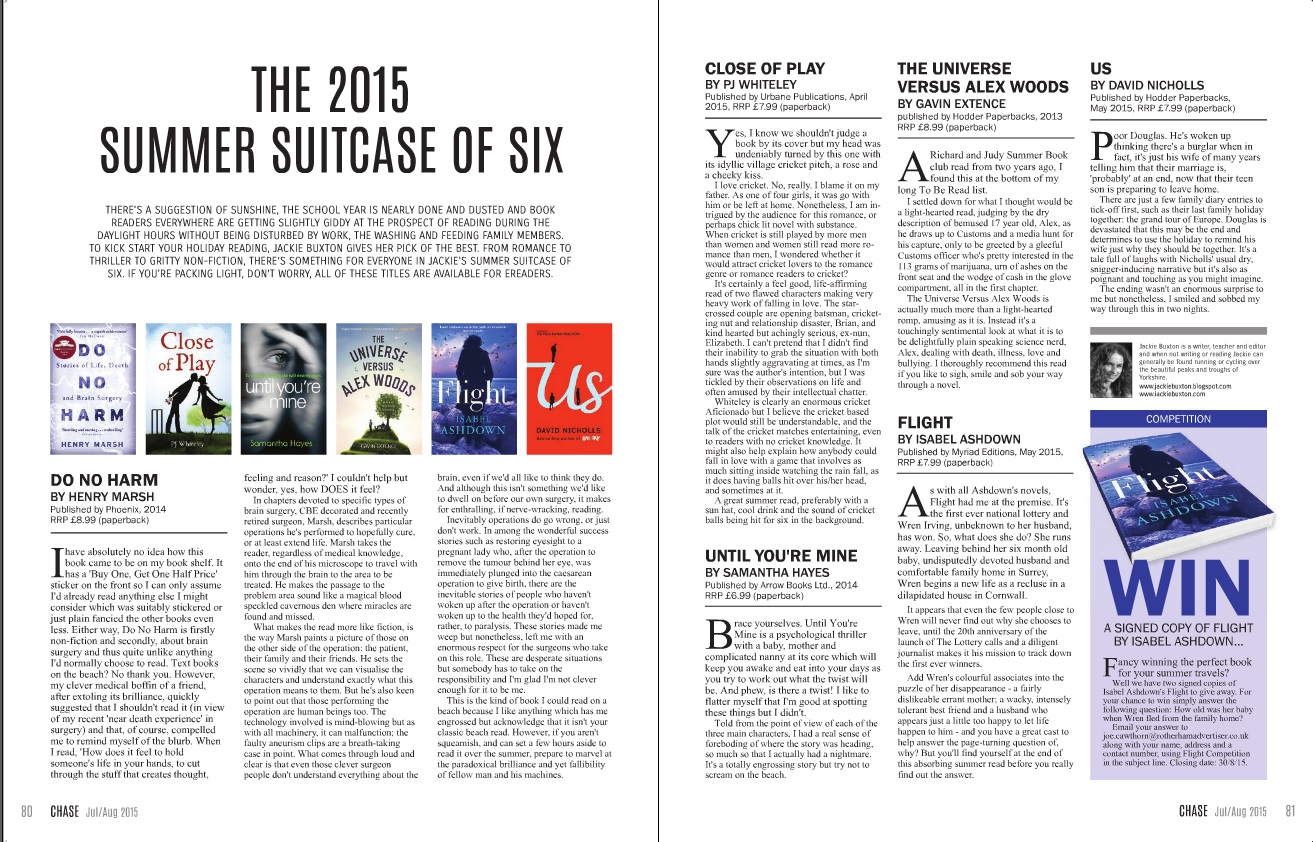
  • Close of Play by PJ Whiteley, published by Urbane Publications in April 2015.
  • Cloud Riders by Nick Cook, published by Three Hares Publishing in 2014.
  • Daisy in Chains by Sharon Bolton, published by Bantam Press in 2016.
  • Dear Thing by Julie Cohen, published by Bantam Press in 2014.
  • Do No Harm by Henry Marsh, published by Phoenix in 2014.
  • Elizabeth is Missing by Emma Healey, published by Penguin in 2014.
  • Feel the Fear (Ruby Redfort, book four) by Lauren Child, published by Harper Collins children's Books in 2015.
  • Flight by Isabel Ashdown, published by Myriad Editions in May 2015.
  • Gorgeous Christmas by Annie Bell, published by Kyle Cathie Limited in 2009.
  • How to Fight a Dragon’s Fury by Cressida Cowell, published by Hodder Children’s Books in 2015.
  • Instructions for a Heatwave by Maggie O’Farrell, published by Tinder Press in 2013.
  • Leaving Time by Jodi Picoult, published by Hodder Paperbacks in July 2015.
  • Little Gypsy by Roxy Freeman, published by Simon & Shuster UK in 2011.
  • Me Before You by Jojo Moyles, Published by Penguin in 2012.
  • Mrs Sinclair's Secret by Louise Walters, published by Hodder Paperbacks in 2014.
  • On a Beam of Light, A Story by Albert Einstein by Jennifer Berne, published by Chronicle in 2013 (children's literature).
  • Paradise Lodge by Nina Stibbe, published by Viking in 2016 (Young Adult).
  • Please, Mister Postman by Alan Johnson, published by Corgi in 2015.
  • Rook by Jane Rusbridge, published by Bloomsbury Circus in 2012.
  • Salvage The Bones by Jesmyn Ward, published by Bloomsbury Publishing in 2012.
  • She is Not Invisible by Marcus Sedgwick, published by Indigo in 2014 (Young Adult).
  • Start With Your Sock Drawer by Vicky Silverthorn with Emma Cooling, published by Sphere in 2016.
  • Starter for Ten by David Nicholls, published by Hodder & Stoughton in 2004. 
  • Stone Seeds by Jo Ely, published by Urbane Publications in 2016.
  • Stranger Child by Rachel Abbott, published by Black Dot Publishing in 2015.
  • Survivor by Tom Hoyle, published by Macmillan Children’s Books in 2015.
  • Sweet home by Carys Bray, published by Windmill Books in 2016.
  • The Brilliant & Forever by Kevin MacNeil, published by Polygon in 2016.
  • The Children Act by Ian McEwan, published by Vintage in April 2015.
  • The Fault in our Stars by John Green, published by Penguin in 2013 (Young Adult).
  • The Goldfinch by Donna Tartt, published by Abacus in 2014.
  • The Good Children by Roopa Farooki, published by Tinder Press in 2014.
  • The Guernsey Literary and Potato Peel Pie Society by Mary Ann Shaffer & Annie Barrows, Published by Bloomsbury in 2008.
  • The Heart Goes Last by Margaret Atwood, published by Bloomsbury in September 2015.
  • The Humans by Matt Haig, Published by Canongate Books in 2013.
  • The Idiot Brain: A Neuroscientist Explains What Your Head is Really Up To, by Dean Burnett, published by Guardian Faber Publishing in February 2016.
  • The Kindness by Polly Samson, published by Bloomsbury paperbacks in 2016. 
  • The Last of Us by Rob Ewing, published by the Borough Press in 2016.
  • The Life and Loves of a He Devil: A Memoir by Graham Norton, published by Hodder Paperbacks in July 2015.
  • The Little Book of Lunch, by Caroline Craig and Sophie Missing, published by Square Peg in 2014.
  • The Lonely Life of Biddy Weir by Lesley Allen, published by Twenty7 in 2016.
  • The Love Song of Miss Queenie Hennessy by Rachel Joyce, published by Transworld Books in 2014.
  • The Magic of Reality by Richard Dawkins, published by Black Swan in 2012.
  • The Man Who Forgot His Wife by John O’Farrell, published by Black Swan in 2012.
  • The Runaway Smile by Nicholas Rossis, published by CreateSpace Independent Publishing in 2014.
  • The Secrets We Left Behind by Susan Elliot Wright, published by Simon & Schuster in 2014.
  • The Sense of an Ending by Julian Barnes, published by Vintage Books in 2012.
  • The Trouble with Goats and Sheep, by Joanna Cannon, published by The Borough Press in 2016.
  • The Undertaking by Audrey Magee, published by Atlantic Books in 2014. .
  • The Woman Who Went to Bed For a Year by Sue Townsend, published by Penguin in 2012.
  • The World According To Bob by James Bowen, published by Hodder and Stoughton in 2014.
  • Tom Kerridge’s Proper Pub Food by Tom Kerridge, published by Absolute Press in 2013.
  • Until You’re Mine by Samantha Hayes, published by Arrow Books Ltd. in 2014.
  • Us by David Nicholls, published by Hodder Paperbacks in May 2015.
  • Vigilante by Shelley Harris, published by Weidenfeld & Nicolson in January 2015.
  • What On Earth Wallbook from The Big Bang to the Present Day, by Christopher Lloyd and Andy Forshaw, published by What On Earth Publishing Ltd., in 2015 (age 10+).


Friday, 23 December 2016

The Bottom of the Swimming Pool

I had a letter in the post today from Louise Goldsmith, a 21 year old who spoke so eloquently and soulfully it pulled at my heart. I don't know Louise but I can relate to her story. She has had severe hearing loss since she was seven years old and the letter is a candid account of this 'hidden disability' as she calls it, how she'd like to say her lack of hearing hasn’t adversely affected her life in any way, but, sadly, she isn't able to do this.

It's an insight into a world I know.

I'm not sure my hearing loss is as profound as Louise's – yet – and it certainly wasn't as bad when I was in my twenties, but it is a constant stress. I'm helped by amazing technology, not least my discrete Bluetooth hearing aids (I wrote about their maiden outing, here), the crystal clear headphones for the TV and the addition of subtitles. And I thank my lucky stars that I live in an age when I can carry out my entire communication through messaging of various sorts without ever having to put any of us through the ordeal of having to speak on the phone. Cochlear implants and Bone Anchored Hearing Aids are a possibility for the future and thus I live in hope that I won't become the little old lady in the corner whom everyone ignores, because it's easier.

Nonetheless, it's isolating not being able to hear and it affects every part of life – work and play. It's exhausting when every conversation is a missing word quiz and depressing when people think you are stupid and that you don't get the joke you didn't hear.

But it isn't all bad.

I have particularly noticed recently, probably because my hearing has plummeted lately, that my family have strategies to help me join in and that these have become automatic. It means that in my home, as long as I have my hearing aids, I don't have too much difficulty communicating. Reading Louise's flier, I thought it might be useful to share some of these tips before the typical large group, multi-generational, terrifyingly full of background noise festive party season is fully upon us. I hope it might be helpful to those who hear well and those who don't.

Here goes!

Please don't SHOUT! I totally understand how frustrating it is to be with someone whose every second sentence is, 'Sorry, I missed that,' and I understand the instinct to raise our voice. However, for many of us, it isn't that a voice is quiet so much as the speech is muffled.

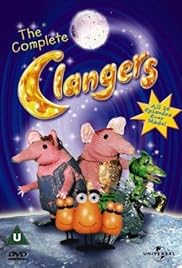
The Clangers Poster
To try to give a picture of what it's like, imagine yourself tucking into your Christmas dinner whilst attempting to converse with your neighbour, all at the bottom of a swimming pool. New Year's Eve party? Add the Clangers to the bottom of the pool, dispersed around you, all talking loudly in sounds you can't understand but conspiring to drown out your neighbour nonetheless. If the person with whom you were trying to communicate simply shouted, it wouldn't make any difference to your comprehension. If however, they turned to face you and really enunciated their words, using more pronounced facial gestures, then you'd have a chance of understanding.

The trouble with shouting, apart from the fact it often doesn't help, is that it's really not very nice to be shouted at - particularly when everyone else is speaking at normal pitch. Because with the shout comes the facial expression: the screwed up, pained face. I know the intention is not to make the interlocutor feel awful but it makes me want to crawl away. After all, the conversationalist is clearly intensely annoyed (people only shout when they're cross, don't they?) and you are responsible for ruining their day, you and your sub-standard hearing - so why would you choose to hang around? If somebody shouts, I bluff that I've heard and feign a sudden need for the Ladies. 

Alter rather than Repeat: Often, people who struggle with their hearing miss the first word, or a particular word, and can't get the gist of the sentence because of that. Sometimes, the conversation can be saved simply through repeating it directly to the person in question but if this doesn't work, paraphrasing might be all that's needed to get around the troublesome word.

Face your Partner: For all of us, not just the hard of hearing, understanding speech is about so much more than the actual words spoken. We glean the sense of it through context and the 'music and the dance'. I remember a first hearing consultant saying to me shortly before I wore hearing aids that when he looked at my audiogram - a graph which represents the picture of an individual's ability to hear different sounds - he couldn't understand how I could possibly function but, he was quick to add, he saw this all the time. He said that it was a reminder to us that communication is about much more than words. In fact, it's oft quoted that 93% of what we hear is communicated through everything but the words. According to a certain Professor Mehrabian in 1971, 55% of communication is in the body language, 38% is in the tone of voice with only 7% being the words spoken.  

Now, the exact figures have since been rebuked but I think there is truth in the message. Certainly, that first consultant was convinced that was how people with hearing loss could manage surprisingly well. I would also suggest that people who are hard of hearing whilst perhaps not so good at hearing changes in tone of voice, might be even better at reading body language than this stat states.

And living proof of this is that I understand so much better if I face the person with whom I'm speaking. I don't officially lip read (although I'm about to learn and am ridiculously excited about the potential for my new skill) but matching the lips to the muffled sounds is often all I need.

Don't Walk Away! For the same reason, I wouldn’t even attempt to have any meaningful conversation with your back to whom you're speaking as you walk away.

Come and Ask! Likewise, my family have largely learnt that there is little point shouting from another room when they've been doing 'boys-or-teen-looking', in the hope I'll come scurrying to find said not-really-lost item. Even if I can hear the call, I won't know who or where it's coming from nor what it's about. If I'm really needed, my family have to come to me.

Well, we have to have some perks, don’t we…?

It does matter: And finally, and oh so importantly, please, please don't say, It Doesn't Matter. Because it really, really does. What might seem a seemingly inconsequential throwaway comment to you, is actually the stuff which makes the world go around. It's the context, it's the relationship, and nothing is more depressing than being told that what everybody else heard, isn't important enough to repeat to you. It's isolating and the more it happens, the more I become that little lady in the corner of the room, in the corner of life.

My hearing could be worse, I could be profoundly deaf, but it is a problem. For me, and everybody with hearing loss, please practise your very best diction this Christmas and look into our eyes when you speak.

That would be our very best Christmas present and an enormous helping hand through 2017.


PS There is good news for poor hearing. Increased deafness goes hand in hand with an ageing population and scientists and businesses have taken up the challenge. Breakthroughs are coming thick and fast and I am very hopeful for my hearing future and that of everyone currently struggling. Action on Hearing Loss (formerly the RNID) is a charity helping to find cures. If you haven't sent Christmas cards this year and keep meaning to get round to a charity donation instead, please consider supporting Action on Hearing Loss. More information here  

Tuesday, 20 December 2016

A Day that Was

You know those days when you collapse into bed, pull the duvet up around your ears and, totally spent, realise that was a day that was? That day was Friday 9 December.

It started like any other day. Bags packed for Newark, boot loaded with books, back seat stashed with Christmas presents, and me, bursting with good intentions of not being late to meet my mum for lunch in our new favourite coffee house, Strays in Newark. I was thwarted, of course, by my just-one-more-email habit and thus screeched into my mum's drive a *little* later than intended. Still, we managed our sandwich, and threw in a bonus second coffee (and mince pie) at the end of the afternoon as well, so I think I'm forgiven.

Meanwhile, I had the small matter of my talk at Newark library. I was nervous. Even more nervous than usual. There's something about speaking in front of people you know which makes you feel much more self-conscious, don't you think? It's where the 'worst case scenario strategy' doesn’t work anymore: if I trip when I stand up from my seat and drag the chair leg with me to the front of the stage before propelling myself into the lap of the unfortunate person who chose a front row seat, then, scuttling back into position, forget why on earth I'm standing in front of all these people and wonder if they'd be happy to hear about the contents of my Christmas shopping list because that's all I can think about right now, - then hey! It's not so bad because I'll never see these people again.

Oh yes, I will.

And if you think that the above is a figment of my warped imagination, click here to see why my fears have valid substance.

In the audience were some school friends, including one I hadn't seen for thirty years (remembered fondly for walking me home from many a night out in Newark, we being the only two who had the misfortune to live an hour's walk from the pubs) together with the handful of others who constantly support my endeavours. While it warms my heart to know they are with me once again, I don't want to let them down. I recognised some lovely tweeps with whom I've bonded over cancer on-line (I told you cancer wasn’t all bad). One even brought me a present of gorgeous, home-made, paraben-free (oh yes) soap and lip balm. With her were a gaggle of fire safety officers, passionate about keeping phones out of cars. You would be wouldn't you, if you attended the road traffic accidents they do. And last but certainly not least was the local radio presenter, June Rowlands, with whom I'll be chatting on air on the 29th January. I was humbled that June took the time to come and listen and while it was wonderful to meet her in person, there was the niggling fear that five minutes into the talk, she would fiercely regret ever booking me in the first place. All this in addition to the many new faces who'd taken time out of a busy Friday afternoon in December to listen to me, when I suspect they had the odd other job to do.

It's fair to say, I felt the pressure.

I'm happy to report that my feet stayed firmly planted in position with no suggestion of a stumble (although I note from my friend's photograph that I was crossing my ankles and my physio - she's not strictly 'my' physio, you understand, but it feels like that sometimes -  would take a very dim view). I remembered what I wanted to say and said it in just about the allotted time frame. Although this is remarkable in itself, it isn't what will make the day memorable.

It was everybody else's input.

There were so many pertinent questions and anecdotes from people's lives relating to the themes of Glass Houses and Tea & Chemo and they kept on coming, so much so that I felt compelled to flash a glance or two at the organiser of the event to check it was ok that we were all still there. We spent a long time on the meaning of life, including near death experiences, but trust me when I say that it was a truly upbeat conversation about getting the most from life. I stood in that room in Newark library and all the rubbish, both globally and closer to home of the last few years, seemed so far away in those two hours. There was so much positivity even though people were talking about quite harrowing experiences. One lady even spoke about her mother who died as the result of a road traffic accident and how, it took a year, but eventually she felt compelled to talk to the driver of the car. She needed to let the driver know that she forgave them, that she knew it wasn't intentional. She had to express her forgiveness so that the driver could move on with their life. And thus so she could move on, too. I think there were a lot of us in the room holding it together at that point. What an incredible lady.

Some normality returned as I drove home, touching 50mph maximum because the run flat light had come on in the car. It's the second time in two long trips for me that this has happened. Me and this car do not get on. Still, at least we didn't have this little experience which is what happened last time the light came on. 

Only a few people beeped and gesticulated to make sure I was under no illusions that I am an idiot. I think I need to construct a sign saying that I am driving in the inside lane of the dual carriageway at 50mph because otherwise I will have a blow-out and that, my friend, is going to slow up your journey even more than the speed I'm currently driving which, by the way, is much more frustrating for me as I have to do it all the way home.

I didn't mind the elongated journey. I was happy to stay in the moment. There is much goodness in the world and it isn't the total bleakness we can trick ourselves into thinking. Ordinary folk, the ones having the ordinary days, are doing extraordinary things. People put up with so much in their lives and keep smiling, keep being kind to others and if we want to feel better about the world, I wonder if we should simply look to those closer to home.

There is madness. I have an enormous dollop of Weltschmerz sitting in my head at the moment, like so many of us. I really do fear that the world may not exist in any recognisable form for even my children's generation, for so many and varied reasons. But I came away thinking that people never really change. People are the constant and people are what might just make it work out in the long run.

That is why that Friday afternoon in Newark Library will be a day to remember for me.

Thank you so much to everybody who came along, to the library for their organisation, to those who spoke and those who listened and those who enthused. It was a day that was. 

Tuesday, 29 November 2016

Thinly Disguised Campaign?

Glass Houses isn't a thinly disguised anti-texting while driving campaign – although if it made people think twice before lifting their phone, after doing the research I had to do for Glass Houses, nobody would be happier about that than me.

Where Glass Houses really came from is the subject of a talk I'm doing at Newark Library on Friday 9th December at 2pm and I'd love you to join me. There'll be an opportunity for chat and questions and to buy signed copies of Glass Houses and Tea & Chemo. Refreshments provided, of course!

And I promise the whole event will be a lot more jolly than my introduction might have lead you to believe.

For further information and to register (entrance is free but the library request that you sign up in advance, please) click here: contact details and map

Hope to see you there!


Tuesday, 22 November 2016

Great Coffee, A Few Tears...

Thanks so much to everybody who came to Stray's book shop and fantabulous  - it truly is - café in Newark last Saturday. It was magical to see old friends, parents of friends who couldn’t make it, two of my former teachers, new readers and of course, my mum, my brilliant pseudo-agent for The Midlands :) 

Big thanks to Stu, for his photography and event management (i.e. the pub, ahem, the pubs, afterwards). Great night! We sold lots of copies of both Glass Houses and Tea & Chemo and I'm ever grateful to everyone who takes time out of their busy Saturdays to ensure us poor little writers aren't sitting alone with a pile of books as high as my To Be Read pile and a bowl of chocolates we're trying not to eat.

Thanks also to 'Louise's hubbie' who reduced everybody within earshot to tears when we heard that he had, unbeknownst to Louise, come in to buy her a signed copy of Tea & Chemo. Recently diagnosed with cancer, Louise and I have become Twitter buddies and she had wanted to come in herself. Unfortunately, her plans were thwarted by a complication following her mastectomy operation.

Louise thought hubbie was just in Newark to buy Ibuprofen but no, he procured said signed copy, earned himself humongous caring husband points from the doting crowd and probably reduced Louise to tears when he got home, too. I'd like to wish Louise and her husband, and everyone in the same loathsome boat, all the very best as they continue their journey of beating cancer to a pulp. I am with you in spirit, willing you to that finish post.

I hate cancer. I hate that it still exists but, for the moment, it does. So please, check yourselves. It won't stop you getting cancer, but early diagnosis might save your life.


Meanwhile, the lovely Katherine of Bibliomaniac has been busy again and this time she's talking about Tea & Chemo over on her blog. Katherine is masterful at thinking up original questions so I've had fun conjuring up my responses to things I haven't been asked before. You can read the post here.